

Lace fabric is a decorative textile known for its open structure, patterned surface and wide range of applications. Depending on its construction, yarn composition and finishing, lace can be soft and elastic, structured and non-stretch, or combined with embroidery, jacquard patterns and other surface techniques.
For fashion brands, garment manufacturers and textile buyers, choosing the right lace is not only about appearance. Fabric construction, stretch, weight, width, pattern repeat, color consistency and production capability all affect the final garment.
What Is Lace Fabric?
Lace fabric is made with an open or semi-open structure that creates decorative patterns through knitting, weaving, embroidery or other textile techniques.
Modern lace is available in many constructions, including:
-
Stretch lace
-
Non-stretch lace
-
Jacquard lace
-
Embroidered lace
-
Chemical or burnout lace
-
Chantilly lace
-
Lace trims and decorative panels
The same lace pattern can also perform differently depending on yarn composition, fabric density and finishing. Therefore, product selection should always consider both design requirements and garment performance.
Main Types of Lace Fabric
Stretch Lace
Stretch lace usually incorporates elastane or elastic yarns to provide flexibility and recovery. It is commonly used for fitted garments, lingerie, tops, dresses and fashion details where movement and comfort are important.
Non-Stretch Lace
Non-stretch lace provides greater dimensional stability and a more structured appearance. It is suitable for garments and decorative applications where shape retention is more important than elasticity.
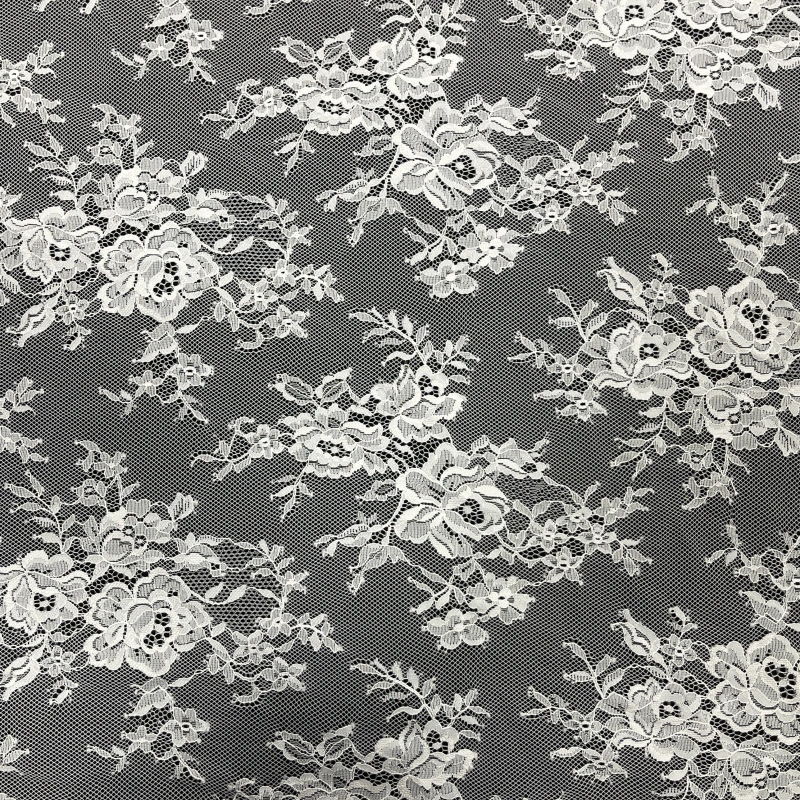
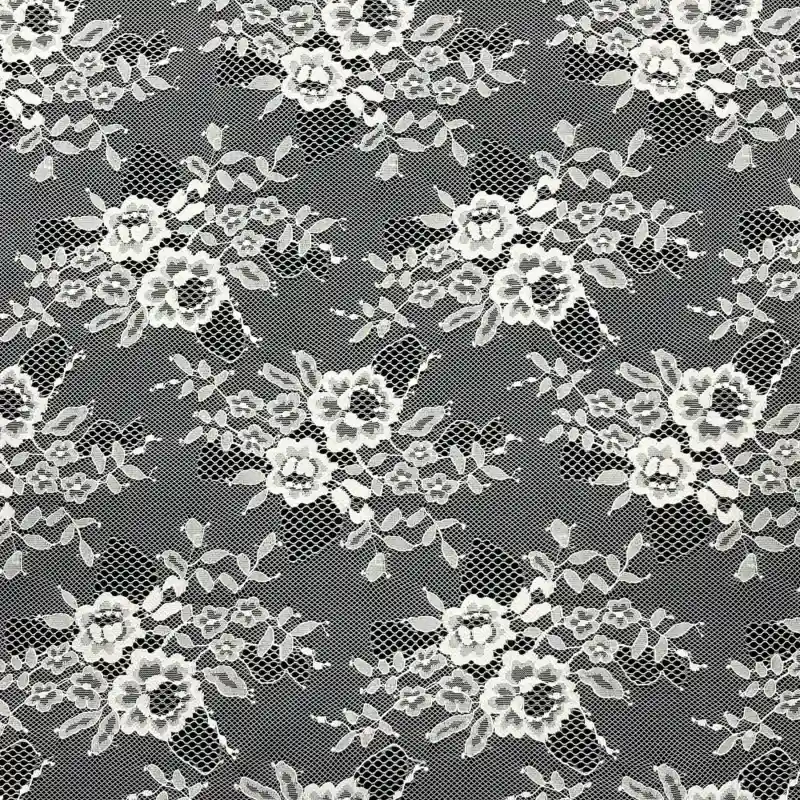
Embroidered Lace
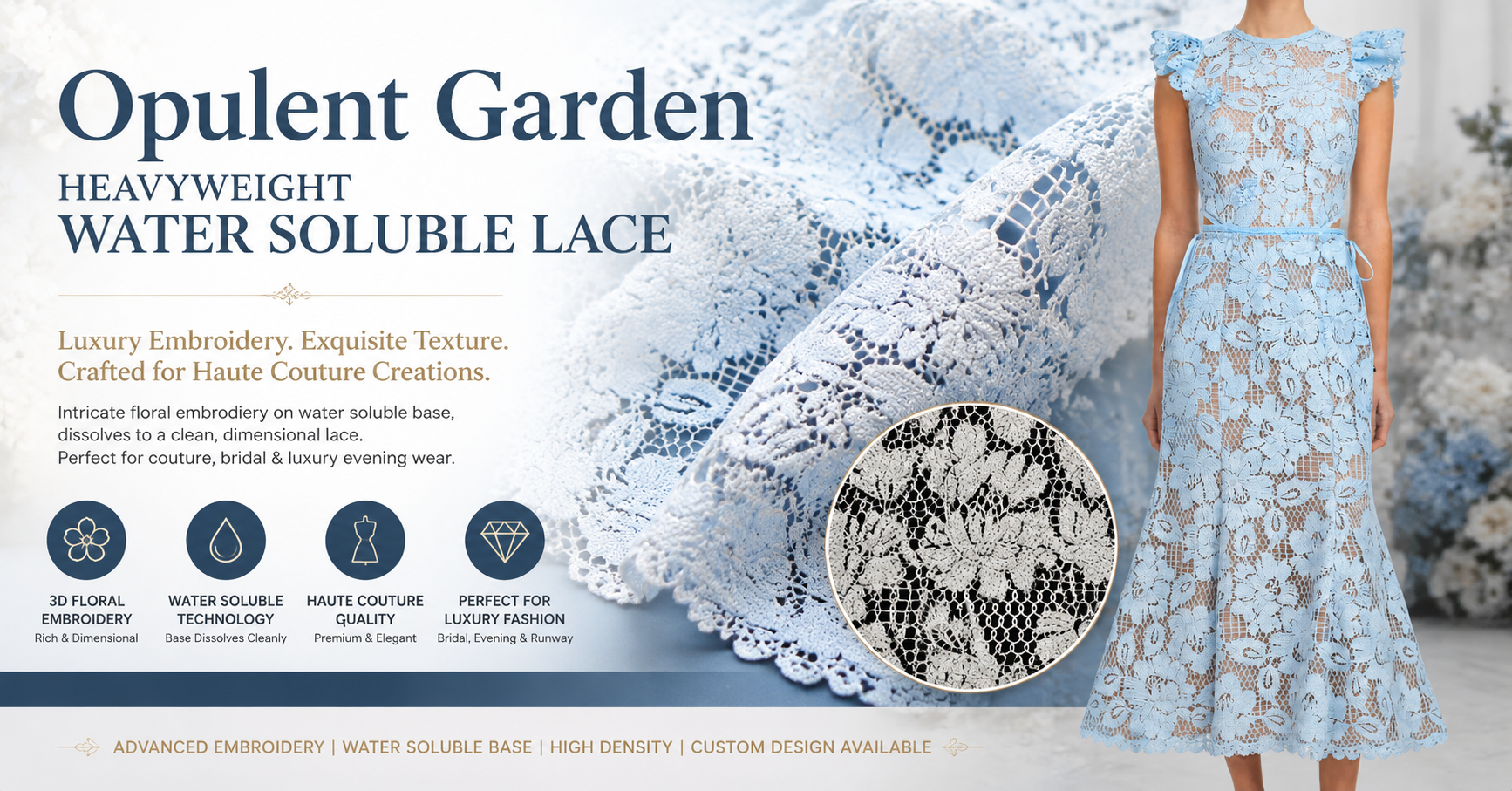
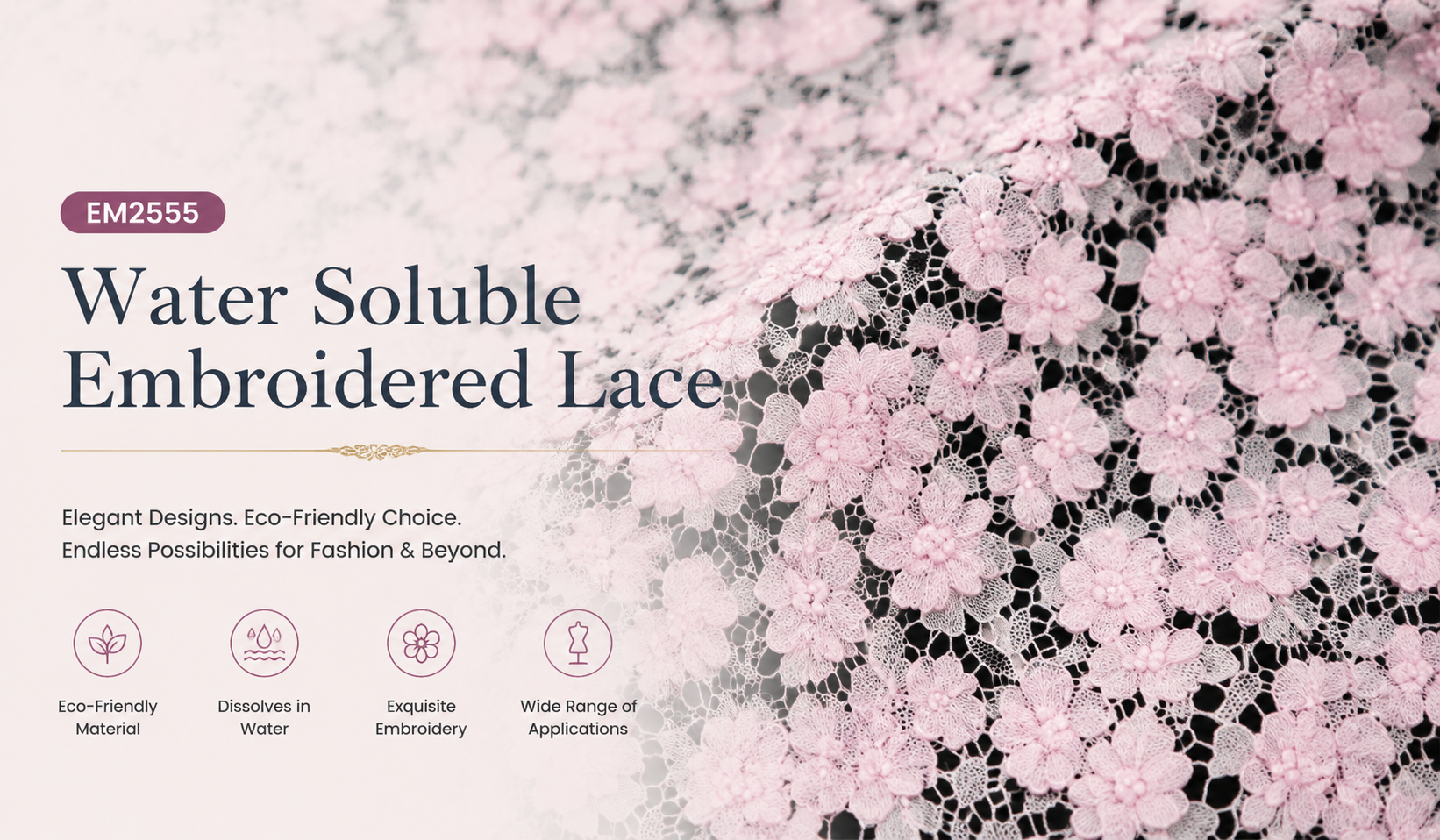
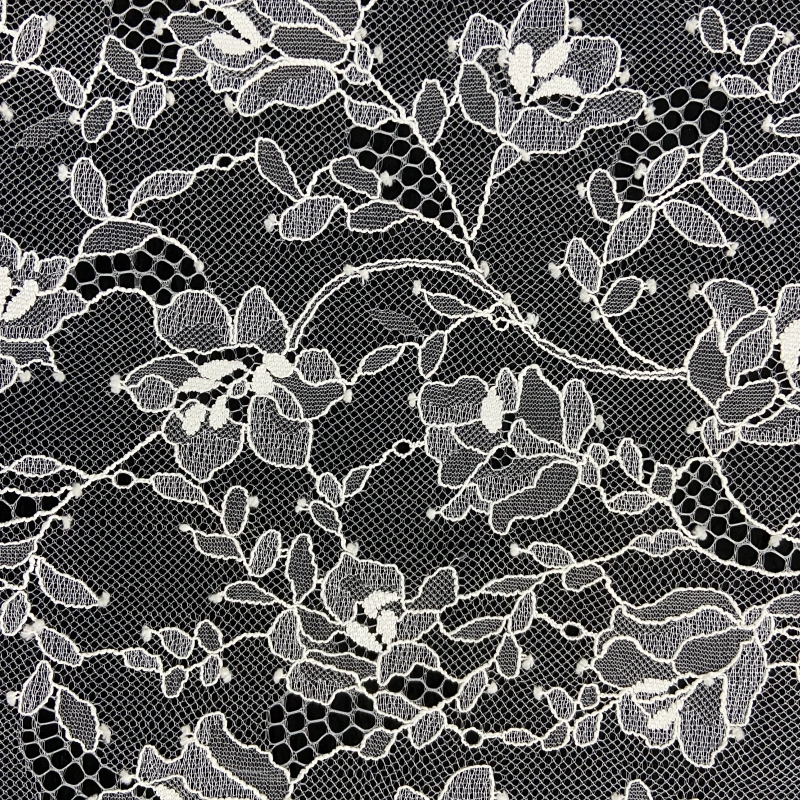
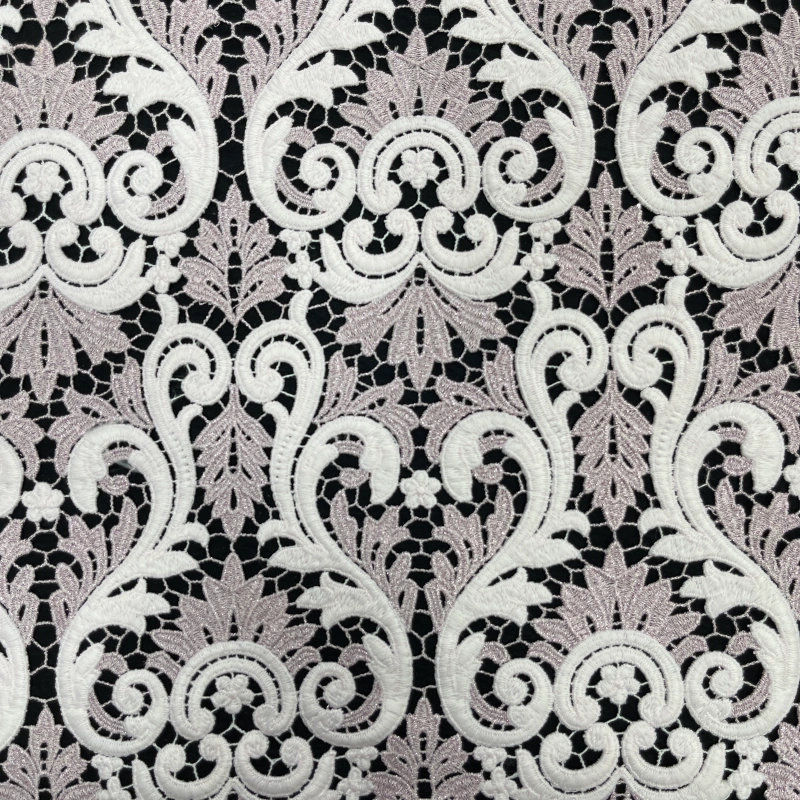
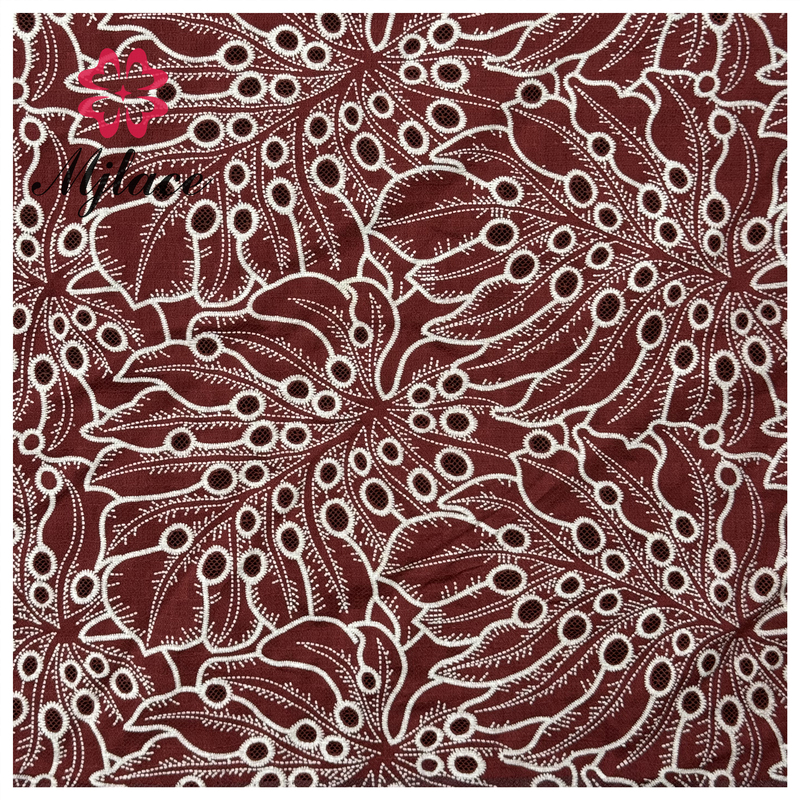
Embroidered lace combines a lace or mesh base with additional embroidery. Different embroidery densities, threads and patterns can create anything from lightweight floral designs to heavily textured surfaces.
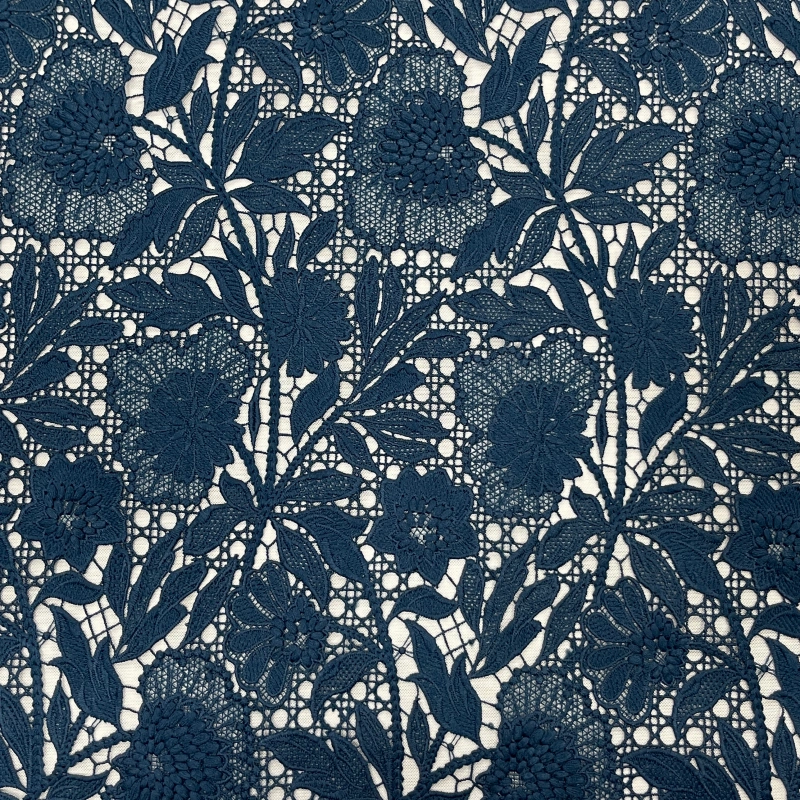
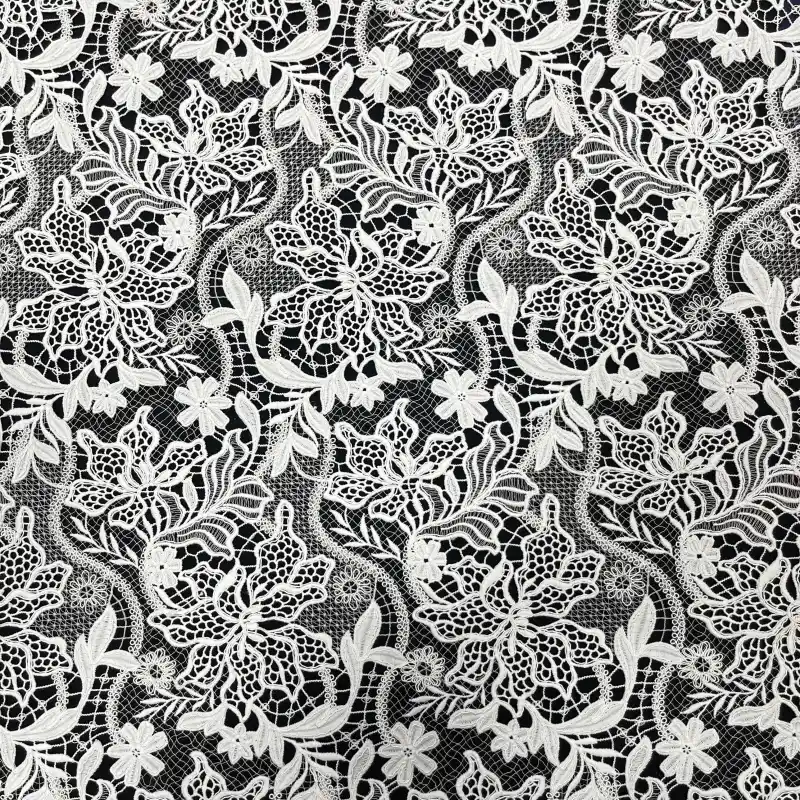
For more specialized constructions, see our guide to lace types and categories.
Jacquard Lace
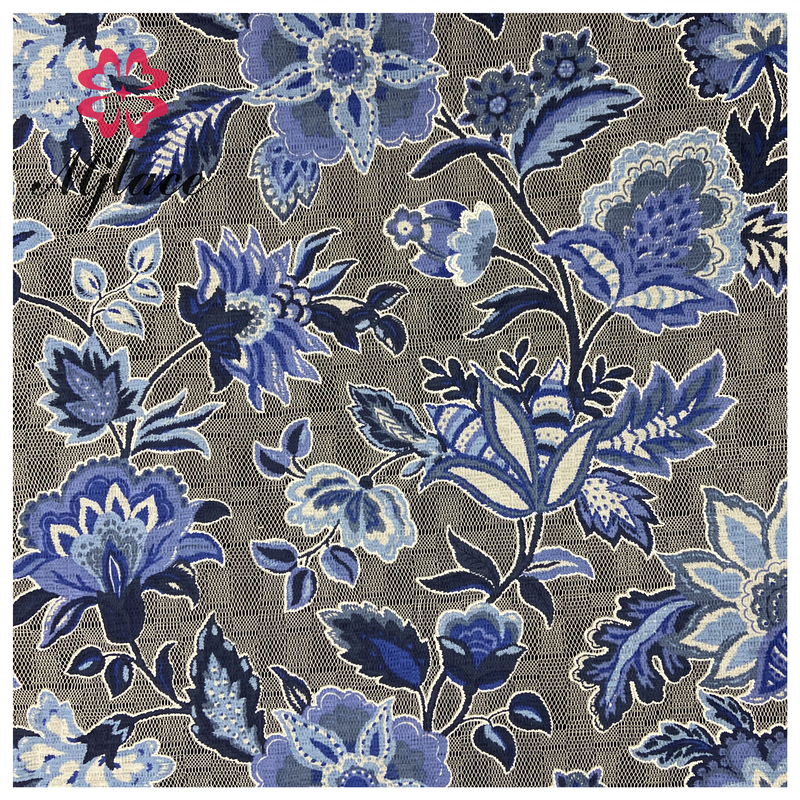
Jacquard lace uses controlled pattern formation during fabric production to create detailed motifs directly within the textile structure. It is often selected for sophisticated apparel and premium fashion collections.
Chemical and Burnout Lace
Chemical lace and burnout techniques use controlled chemical processes to create open areas or remove selected parts of the base material. These techniques can produce distinctive patterns and lightweight decorative effects.
For a detailed look at this technique, read our guide on burnout lace.
Stretch vs. Non-Stretch Lace
| Feature | Stretch Lace | Non-Stretch Lace |
|---|---|---|
| Elasticity | High or moderate | Little or none |
| Hand feel | Soft and flexible | More stable and structured |
| Recovery | Important | Generally not required |
| Typical use | Fitted garments, lingerie, dresses | Structured garments, trims, decorative panels |
| Key QC point | Stretch and recovery | Dimensional stability |
The choice should be based on the garment construction rather than appearance alone.
For quality considerations across both categories, explore our quality control standards.
Common Lace Materials
Lace can be produced from different fibers depending on the required appearance, strength and performance.
Nylon is widely used for lightweight lace because of its strength, flexibility and processing characteristics.
Polyester provides good durability and dimensional stability and is suitable for many commercial apparel applications.
Cotton offers a natural hand feel and is often selected for casualwear, vintage-inspired designs and products where natural fibers are preferred.
Blended yarns can combine the advantages of different fibers, such as softness, elasticity, durability or improved recovery.
Material selection should be determined together with the intended application, production method and finishing requirements.
For material-related sourcing considerations, visit our buying guide.
How Is Lace Fabric Manufactured?
Although production methods vary between lace constructions, a typical manufacturing process includes the following stages:
Yarn and Material Selection
The factory determines the yarn composition according to the required stretch, weight, appearance and end use.
Pattern and Design Development
The lace pattern is converted into a production-ready structure. Important parameters include motif size, repeat, density, edge design and overall layout.
For custom development, artwork or reference samples can be used as the starting point.
To understand this process in detail, read our pattern design development guide.
Lace Production
Different machines and techniques are used according to the construction, including warp knitting, jacquard production and computerized embroidery.
The production method directly influences the fabric's appearance, elasticity, stability and pattern precision.
For a technical overview, explore our lace manufacturing technology.
Dyeing and Finishing
After production, lace may undergo dyeing, softening, heat setting and other finishing processes.
Color matching is particularly important for custom orders because the final color can be affected by fiber composition and finishing conditions.
For color-related guidance, visit our dyeing and color matching.
Quality Inspection
Before shipment, the fabric should be checked for:
Pattern consistency, Fabric width, GSM, Color consistency, Stretch and recovery, Dimensional stability, Embroidery defects, Surface defects, Colorfastness
A professional lace fabric quality control process helps reduce inconsistencies between samples and bulk production.
For a complete inspection workflow, read our guide on lace fabric quality control standards.
How to Choose Lace for Different Garments
The right lace depends on how the fabric will be used.
| Application | Recommended Considerations |
|---|---|
| Dresses | Pattern scale, drape, width and weight |
| Eveningwear | Surface detail, density and appearance |
| Blouses & Tops | Lightweight construction and comfort |
| Skirts | Stability, weight and pattern placement |
| Lingerie | Stretch, recovery and softness |
| Resortwear | Breathability, pattern and hand feel |
| Fashion Accessories | Width, edge design and durability |
Designers should also consider whether the lace will be used as the main fabric, an overlay, a panel, an insert or a decorative trim.
For application-specific insight, visit our applications and industry use.
Stock Lace or Custom Lace?
For standard collections, stock lace can reduce development time and simplify purchasing.
Custom lace is more suitable when a brand needs a specific:
Pattern, Width, Color, Stretch level, Material composition, Pattern repeat, Embroidery effect
Custom development normally starts with artwork, sketches or a physical reference. The factory then develops the pattern, selects suitable materials, produces samples and adjusts the construction before bulk production.
For brands developing original fabrics, our customized process covers design development, material selection, sampling, bulk production and quality inspection.
You can also read our guide on OEM custom lace development from concept to scalable production.
What Should Buyers Provide to a Lace Manufacturer?
The more complete the development information, the easier it is for a factory to provide an accurate solution.
A useful inquiry should include:
-
Reference design or artwork
-
Required lace type
-
Fabric width
-
Material preference
-
Stretch or non-stretch requirement
-
Target color or color sample
-
Estimated order quantity
-
Intended garment
-
Sampling deadline
-
Bulk delivery requirement
A physical sample is especially useful when hand feel, elasticity or pattern structure is difficult to describe.
For a complete sourcing framework, read our complete guide to buying and sourcing lace fabric for fashion designers.
What Affects Lace Fabric Cost?
Lace pricing is influenced by several production factors rather than pattern appearance alone.
The main factors include:
Yarn and fiber composition, Fabric construction, Pattern complexity, Production density, Fabric width, Embroidery or surface decoration, Dyeing and finishing, Custom development requirements, Order quantity, Packaging and delivery requirements
For this reason, a supplier should normally evaluate the complete specification before giving a final quotation.
For practical supplier evaluation criteria, read our guide on how to choose the right lace fabric supplier.
How to Evaluate a Lace Fabric Supplier
For B2B buyers, price should not be the only selection criterion. A capable supplier should be able to demonstrate:
-
Stable production capacity
-
Pattern development capability
-
Consistent bulk quality
-
Color matching experience
-
Sampling and development support
-
Quality inspection procedures
-
Clear communication
-
Experience with international orders
For custom projects, it is also important to confirm whether the supplier actually controls the development and production process or mainly acts as a trading intermediary.
For more on our own manufacturing background, visit our about us page.
FAQ
What is the difference between stretch and non-stretch lace?
Stretch lace contains elastic components or uses a construction that provides elasticity, while non-stretch lace is designed to maintain a more stable structure.
What materials are commonly used for lace?
Nylon, polyester, cotton and blended fibers are commonly used. The best choice depends on the required appearance, stretch, durability and application.
Can lace fabric be customized?
Yes. Depending on the manufacturer, custom projects can include pattern development, material selection, color matching, width, stretch level and embroidery.
What should I provide when ordering custom lace?
Artwork or reference samples, required width, material, color, quantity, application and delivery requirements are the most useful starting information.
How is lace fabric quality checked?
Factories typically inspect pattern consistency, width, GSM, color, stretch and recovery, dimensional stability, surface defects and colorfastness.
Is lace suitable for mass production?
Yes. Lace can be produced for bulk garment manufacturing when the supplier has suitable machinery, standardized production processes and effective quality control.
For more answers, visit our FAQs page.
Conclusion
Lace fabric is not a single type of textile. Its performance and appearance depend on construction, materials, pattern development and finishing.
For fashion brands and garment manufacturers, the most important step is to select lace according to the final garment requirements rather than choosing only by appearance. A capable lace manufacturer can also help optimize material selection, pattern construction, sampling and bulk production.
For brands developing new lace fabrics, custom development and early technical communication can significantly reduce problems during bulk production.
To discuss your lace fabric requirements, contact us or submit an inquiry.