


Introduction: The Art and Science Behind Lace Design
Lace fabric has long been celebrated for its delicate and intricate patterns, adding elegance and sophistication to garments, from wedding dresses to luxury lingerie. However, behind every beautiful lace design is a meticulous and well-planned process that marries creativity with technical precision: pattern and design development.
For designers, manufacturers, and fashion brands, understanding the entire process of lace pattern creation is vital. This guide will walk you through the crucial stages of lace design development, from concept to finished product. Whether you are a designer looking to create unique lace patterns or a manufacturer aiming to streamline production, mastering this process will ensure high-quality, market-ready lace fabric.
The Importance of Pattern & Design Development in Lace Fabric
What Is Pattern & Design Development?
Pattern and design development is the process of taking a conceptual design and transforming it into a manufacturable lace fabric. It involves:
-
Motif creation: Designing individual elements such as flowers, vines, or geometric shapes.
-
Pattern repeat design: Planning how motifs are arranged and repeated across the fabric.
-
Machine compatibility: Ensuring the design can be produced on the available machinery.
-
Technical specifications: Defining yarn types, stitch patterns, and fabric structure.
This is where creativity meets technology, as designers must work with manufacturers to ensure that their artistic vision can be executed on a commercial scale.
Steps in Lace Pattern & Design Development
Step 1: Inspiration and Conceptualization
The inspiration for lace patterns can come from many sources:
-
Nature: Flowers, leaves, and organic shapes are frequently used in lace designs.
-
Art: Classical art, modern design, and historical textiles often influence patterns.
-
Fashion Trends: Seasonal color trends and runway collections inspire lace design choices.
Once the inspiration is clear, designers begin the conceptualization phase, sketching initial ideas for motifs and pattern arrangements.
Step 2: Creating Motifs and Patterns
Once the overall concept is set, designers create the individual motifs—the repeating elements that will form the lace pattern. Motifs can be:
-
Floral: Roses, daisies, and other flowers are classic motifs.
-
Geometric: Diamonds, hexagons, or abstract shapes.
-
Scalloped: For edges and borders, creating fluidity in designs.
These motifs are usually created manually (by hand-drawing) or using design software, depending on the designer's workflow and the scale of production.
Step 3: Pattern Repeat and Scaling
One of the critical aspects of lace design is how the motifs are repeated across the fabric. Designers determine:
-
Repeat length: How many motifs fit across a certain width of fabric.
-
Pattern alignment: Ensuring that the motifs align consistently throughout the fabric.
-
Scalability: Ensuring the pattern works at larger or smaller scales depending on its final use (e.g., for garments vs. home decor).
Pattern repeats are typically designed to fit the production machine’s capabilities, meaning that the size and repeat must be feasible for the machine to reproduce.
Step 4: Selection of Fabric and Materials
Lace designs are often made from a variety of materials, such as:
-
Nylon: Popular for stretch lace, as it provides durability and elasticity.
-
Cotton: Used in classic lace designs for its breathability and softness.
-
Polyester: A versatile option for synthetic lace fabrics, offering durability and affordability.
-
Spandex: For stretch lace, providing flexibility and comfort.
The choice of material impacts the final look, feel, and functionality of the lace, which should align with the intended garment's purpose.
Lace Pattern Design Techniques
Digital Design & CAD Software
With advances in digital design tools, the lace design process has become faster and more accurate. Computer-Aided Design (CAD) software allows designers to:
-
Create detailed motifs and patterns digitally.
-
Test different color schemes and texture effects.
-
Simulate fabric structures before producing physical samples.
This technology not only speeds up the design process but also allows for a higher degree of precision, ensuring that every motif is consistent.
Jacquard and Warp Knitting Machines
For complex lace patterns, Jacquard and warp knitting machines are often used to achieve intricate designs. These machines use:
-
Jacquard machines: Enable designs with complex, multi-colored motifs. These are highly versatile and allow for the creation of fine, detailed patterns.
-
Warp knitting machines: Used for stretch lace and simple to moderate designs, these machines provide high-speed production with excellent pattern repeat accuracy.
The design created digitally is then programmed into the machine’s control system, ensuring that the lace is produced accurately.
Sampling and Prototyping
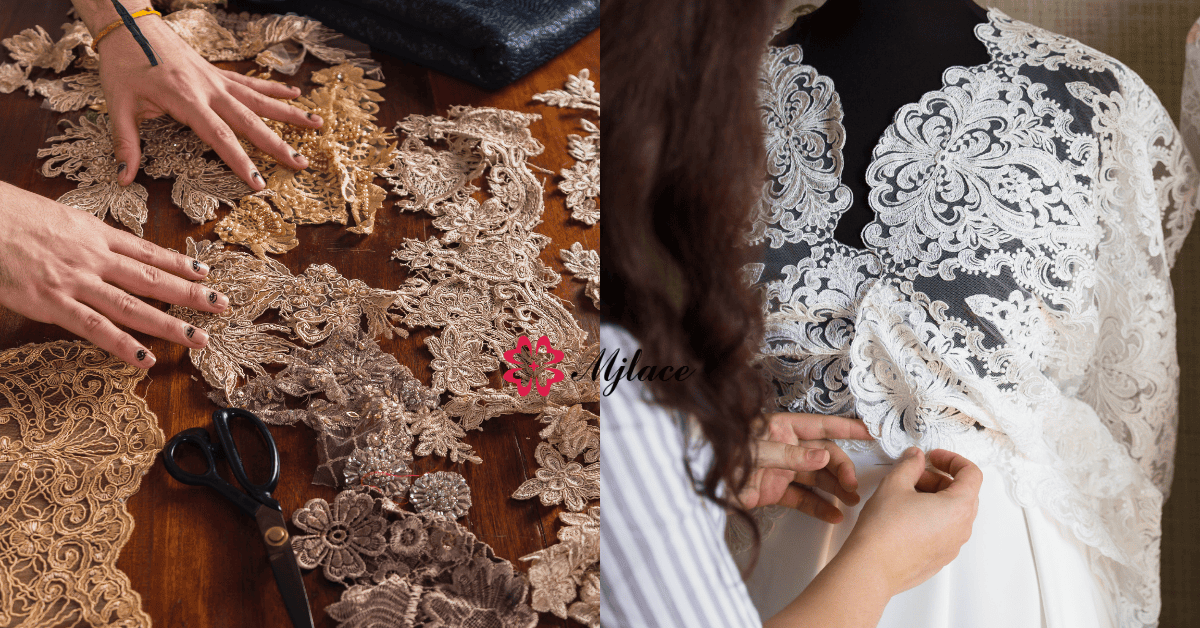
Before production begins, designers create samples or prototypes to test the design’s feasibility. These samples are crucial for:
-
Testing pattern repeat accuracy: Ensuring that the motifs are correctly aligned and repeated.
-
Assessing fabric texture and drape: Seeing how the lace performs when used in actual garments.
-
Identifying issues: Pinpointing any areas where the design may need adjustment for better production or fit.
Once the samples are approved, the lace design can move forward to full-scale production.

Collaboration Between Designers and Manufacturers
Effective collaboration between designers and manufacturers is crucial for the success of any lace design. Designers must ensure their concepts are manufacturable, while manufacturers must provide feedback on how to optimize the design for production.
Key factors in this collaboration include:
-
Communication: Regular updates between the design team and production team.
-
Prototyping: Working together to create and test physical samples.
-
Production timelines: Aligning design development with production schedules.
Sustainability and Innovation in Lace Design
As with other aspects of the fashion industry, sustainability plays a growing role in lace design development. Designers are increasingly opting for:
-
Eco-friendly materials: Organic cotton, recycled polyester, and biodegradable fibers.
-
Low-impact dyeing methods: Reducing water waste and chemical usage.
-
Zero-waste design practices: Creating lace patterns that reduce fabric scrap.
Innovations in sustainable production techniques are making it easier for designers to create beautiful lace without compromising the planet.
Conclusion: Mastering Lace Pattern & Design Development
Pattern and design development is a fascinating and intricate process that requires a deep understanding of both creative design and technical production capabilities. By mastering these skills, designers can create lace patterns that are both visually stunning and technically feasible, ensuring high-quality lace products for the fashion industry.
For manufacturers, the key to successful lace production lies in maintaining an open line of communication with designers, embracing new technologies, and continually innovating to meet evolving market demands.